

Chinese Museums Revive Millennia-old Civilizations with Digital Tech
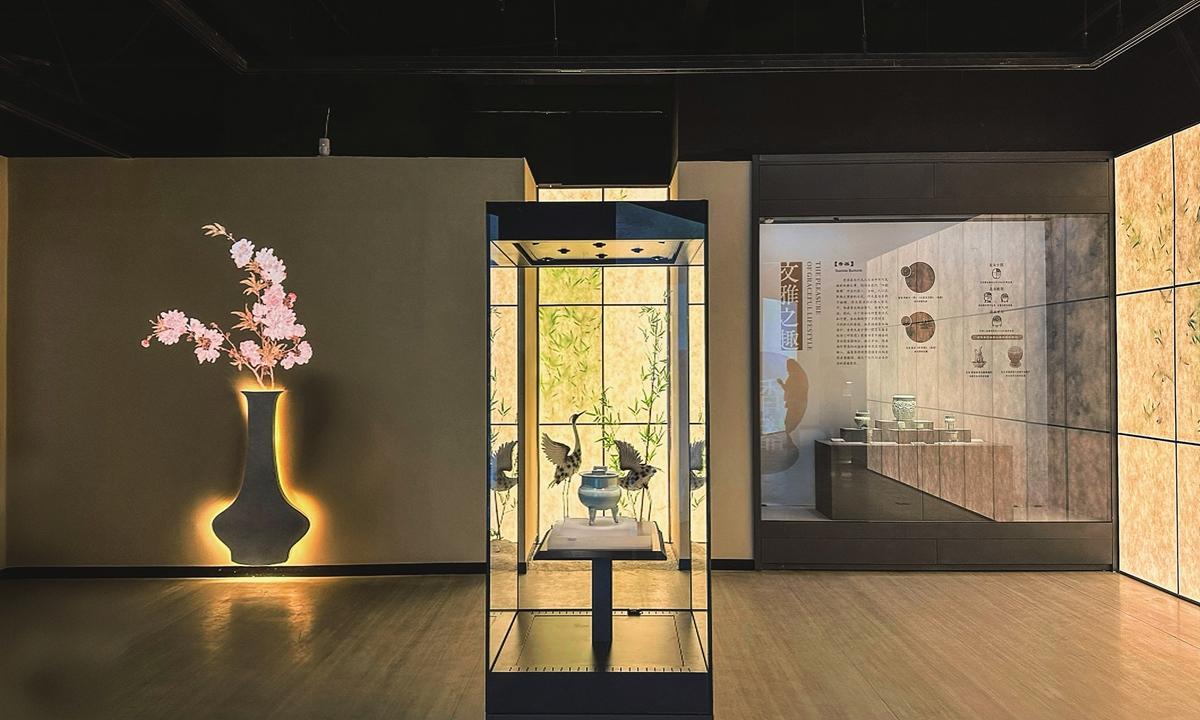
As spring blossoms and the festive season continues, the "cultural heritage craze" is still on the rise in China.
According to data released by the National Cultural Heritage Administration (NCHA), museums across China received approximately 72.65 million visits from January 29 to February 4 this year, the first seven days of the Spring Festival holidays, with daily attendance increasing by 12.84 percent compared to the previous year.
In addition, the country's 55 national archaeological site parks recorded nearly 5.17 million visits during the same period.
According to the NCHA, in 2024, museums in China are expected to welcome over 1.4 billion visitors, setting a new record.
By the end of August 2024, 6,833 museums had been officially registered in China, covering history, art, science, archaeology, etc., according to the Xinhua News Agency.
Museums serve as vital spaces for exploring history and sparking inspiration from culture. Notably, younger generations are gradually becoming the dominant visitors a shift driven by museums' continuous adoption of innovative technologies.
In recent years, advancements in big data, cloud computing, and artificial intelligence have provided new opportunities for museum development. To engage modern audiences, major museums are actively exploring new forms to meet the needs of the new generation of audiences. Compared to traditional exhibitions, younger visitors prefer interactive, visually striking technological methods.
Today, digital technologies such as online digital exhibitions, virtual reality (VR), augmented reality (AR), touchscreen interactions, streaming media, and live online broadcasts have become integral to museum displays, transforming the way history and culture are experienced.
The Palace Museum, for example, is a model of showcasing cultural relics through technology. It has turned the painting "Night Revels of Han Xizai" by Chinese painter Gu Hongzhong during the Five Dynasties (907-960) into a mobile app.
The artwork has been scanned in ultra-high definition, allowing it to be enlarged up to 40 times the size of the original. Visitors can immerse themselves in the painting, viewing it in over 4K resolution without missing a single detail.
This super-detailed viewing experience is difficult to achieve in regular exhibitions. Imagine young people holding their phones and using the app to travel back to the Five Dynasties and witness the lively scene of Han Xizai's night banquet — how could such a novel experience not captivate them?
In addition to the Palace Museum, other museums are also unlocking new tech-based experiences.
Visitors to the digital Dunhuang immersive exhibition hall in the Mogao Caves in Northwest China's Gansu Province can wear VR glasses to “enter” the caves, and “travel” back over 1,400 years to experience the exquisite world of murals.
The Jingdezhen China Ceramic Museum in East China’s Jiangxi Province combines AR, AI, and other cutting-edge technologies in its digital light and shadow exhibition, allowing visitors to immersed in a fantastic world of ceramics, experiencing the unique charm of ceramic culture.
At the newly opened exhibition hall at the Yin Ruins in Anyang, Central China's Henan Province, that was opened to public in February 2024, naked-eye 3D technology brings multiple precious cultural relics together in the same space. This innovative display makes the artifacts appear as if they were narrating ancient stories to the audience.
In natural science museums, technology-driven interactive experiences are particularly captivating to children. Features such as touchscreen walls, virtual books, holographic projections, phantom imaging, arc-screen cinemas, and holographic displays open the door to the wonders of science, offering engaging and dynamic learning experiences.
From late last year to the end of February this year, the China Science and Technology Museum in Beijing has launched an immersive exhibition exploring five major ancient civilization sites—Liangzhu, Taoist Temple, Erlitou, Sanxingdui, and Yin Ruins— guiding visitors through the question: "What Makes a Civilization?"
Within the exhibition hall, replicas of the turquoise dragon-shaped artifacts from Erlitou allow visitors to observe the dragon totem of the ancient people up close; a solemn sacrificial area illuminates the spiritual world of the ancient Shu people through replicas of Sanxingdui artifacts.
Visitors can also experience an unexpected fusion of various art styles, such as Sanxingdui masks with blue and white porcelain, cyberpunk, Lego pixel art, and more.
The exhibition also offers an educational zone specially designed for young audiences, where they can experience archaeological excavations at the Sanxingdui sacrificial pits, try smart painting, and learn about ancient jade-making techniques. This entertaining and educational approach enables children to acquire knowledge while having fun, helping them develop a love for history and culture.
This year, the exhibition will kick off a nationwide tour, relevant personnel from China Science and Technology Museum told media. This means that more young people will have the opportunity to experience the charm of the fusion of technology and cultural history.
Leveraging technologies to bring relics to life and add interactivity to historical and cultural exhibitions, Chinese museums are attracting mounting attention of young people.
With the continued development of technology, museums are expected to introduce even more innovative measures, bringing more surprises to visitors. More and more young people are expected to engage in museum tours to experience the unique charm of ancient civilizations, and witness how history and culture breathe new life in the modern era.
Sources: Voice?of?CAST (VOC)
Please visit the official website of Voice of CAST to find more:?https://voc-gj.cast.org.cn/